
Reverse migration afoot, Texas and Florida to suspend H-1B applications | India, Europe sign “mother of all deals” | Turbulent priest claims he cured Modi of “Trump-wa’s” black magic
Pacts with Canada and France to follow | JD Vance may have stymied India–US trade deal | Mark Tully, who helped the world understand India, signs off | Arijit Singh quits broken film music industry
Edited by Pratik Kanjilal
The Hindu has reprinted its edition for Republic Day, 1950, when India adopted its Constitution.
This year, Republic Day was also a kind of Independence Day: the celebrations raised the curtain on the “mother of all trade deals” between the European Union and India. Declared on January 27, it will scrap or lower barriers to a vast array of products and services, open routes for legal migration of labor and talent, and create a gigantic market 2 billion strong.
Turbulent priest heals Modi of “Trump-wa’s” mantra-tantra

Paramhans Acharya of Ayodhya is usually in the news for outrageous and illegal statements ― he has said that India’s Muslims must be destroyed, and that he could do the destroying himself if the people made him prime minister for one day, preferably a Friday. Now, he says that Defense Minister Rajnath Singh told him that US President “Trump-wa” had hypnotized Indian PM Modi with black magic to make him toe the American line. But now, the Acharya has broken the spell and made him independent again.
Bradman relic from independent India’s first Test series sold
Also on January 26, Lloyds auctioned an unusual relic ― the famous ‘baggy green’ cap which Don Bradman had worn in Australia during a series against India in 1947-48. It went to an anonymous buyer for Australian $460,000 ($324,000, or almost Rs 3 crore in Indian currency). The legendary batsman had given the cap to Sriranga Wasudev ‘Ranga’ Sohoni of Maharashtra, who played for India on that tour, and it was treasured as a family heirloom. The auctioneers joked that Ranga’s family members were allowed to see it for five minutes when they turned 16, and no one else ever saw it in the last 77 years. This is a relic of the first Test series played by independent India, and one of Bradman’s last innings. He retired in 1948.

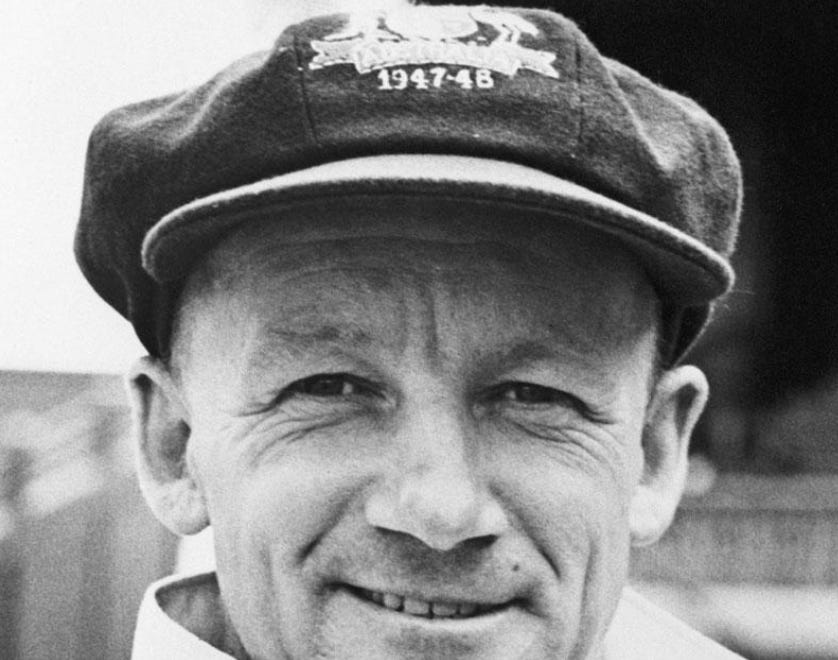
Indian all-rounder ‘Ranga’ Sohoni (top) and Aussie batsman Don Bradman in the series cap
The mother of all trade deals
Back to Indo-European entente, which has dominated world headlines this week, except in the US: India and the European Union, both disparaged by the US in recent weeks, raced against time to close a trade deal that has been hanging fire for 18 years. Talks were initiated by the Manmohan Singh government but faltered. Over the last decade, the deal was taken out of mothballs and declared to be imminent whenever the Modi government was criticised for financial bungling ― only to be put away again when the crisis was past.
But negotiations were put in top gear this summer, when it became clear that the world was about to change ― and India’s trade talks with Washington were shambling nowhere (read about damaad JD Vance’s role below). The deal was talked up before the Republic Day parade, at which European Commission President Ursula von der Leyen and European Council President António Costa were guests of honor, and announced the next day. The EU deal is not just a trade agreement. It makes a geopolitical statement, declaring independence from the US-led trade system.
The Europeans are old hands at using financial links to bind countries together in geopolitical union. The EU itself is a political union founded on fiscal union, which was founded on a common market. Europe’s nations committed to benchmarks supporting a shared currency and dropped trade barriers and border controls to create the Eurozone. Nations as different as France and Greece became entwined in political, fiscal and passport union by partially downing their guard. The negotiation protocols for EU membership have been developed and polished over decades of use, and that legacy may have speeded up the India-EU trade deal.
Europe has now partnered with India to create a gigantic, friction-free market. It means that upper middle class Indian consumers can now buy premium cars, French wine and Greek olive oil. Most significantly, the EU has slashed duties to zero precisely on the Indian export sectors hit hardest by Trump’s tariffs: jewelry, textiles, leather, furniture, chemicals, metals. That’s a palpable signal to the US.
There were other signals, too. Costa, who is former PM of Portugal, underscored people-to-people and cultural connections when he displayed his Overseas Citizen of India ID. He identifies very strongly with Goa, from where his parents migrated to Portugal. Goans reciprocate, calling him ‘Babush’ ― a Konkani term of endearment for a small boy.

Kaja Kallas, vice-president of the European Commission and former PM of Estonia, pointed out that smaller (or less powerful) countries value stability and predictability in their alliances, not “superpowers wanting to rewrite the multilateral order”.

But there are differences with India, too. The EU has a strong ethical framework. This will be a sticking point in digital and AI. For instance, India is perfectly awful on pollution and the environment, which are overarching concerns in Europe. European privacy laws are strict, while India has had a working privacy law only since November 2025. Also, the EU will not overlook workplace issues and exploitation, which the Indian informal sector is often careless about. And the Europeans are committed opponents of politics built on sectarian issues, inequalities and rights violations. Perhaps the effect of the deal on Indian politics, which runs on caste and sectarian tensions, will be as important as its economic and geopolitical effects.
Season of dealmaking ahead for India
French President Emmanuel Macron will be in New Delhi in February for the AI Impact Summit, the first to be held in the Global South, and he will discuss partnerships in AI and rare earths. Canadian Minister for Energy and Natural Resources Tim Hodgson is in India to prepare the ground for his PM Mark Carney’s visit in March, to sign deals in uranium, energy (oil, gas and green), minerals critical for automobiles and electronics, AI and quantum computing. Without naming names, he said that the EU deal is a rejection of “hegemons who use tariffs as leverage”. Carney had raised the standard of revolt against hegemons in Davos.
The deal with Canada would shift the focus away from Khalistan, which dominated diplomacy during the Justin Trudeau era. It has cropped up again ― New York-based Khalistani extremist Gurpatwant Singh Pannun claimed that “sleeper cells” in Delhi would disturb the peace during the Republic Day celebrations. In reality, Khalistan ceased to be an issue in India long ago, and persists only among some Sikh communities overseas. But Pannun did show real video of Khalistani activists defacing the Indian embassy in Zagreb.
Talk about the India–Middle East–Europe Economic Corridor (IMEC) is again in the air. A counter to China’s Belt and Road Initiative, IMEC is based on a memorandum of understanding signed by India with Arab and European powers (including the EU) in 2023. It proposes to recreate ancient India’s sphere of influence in the West, via trade routes leading to Rome, Egypt and the Middle East. Their cultural importance has been described in texts spanning millennia, from the 1st century Graeco-Roman Periplus of the Erythraean Sea to contemporary bestsellers like Peter Frankopan’s The Silk Roads and William Dalrymple’s The Golden Road.
Long H-1B visa pause ahead, reverse migration already afoot
Texas has ordered state agencies and universities not to file new H-1B visa petitions until June 1, 2027, since H-1B visa appointments in India are full up, and US visa offices there have stopped listing available dates. Texas is sensitive because in recent months, Indians from the US coasts have been relocating to the state due to employment and cost of living concerns.
Florida’s Board of Governors, who are in charge of the state’s university system, is also currently seeking to pause H-1B visas for public universities until January 5, 2027.
India remains a leading source of thwarted illegal immigration into the US, with an adventurer caught every 20 minutes. These are mostly unskilled people, while Trump’s crackdown is forcing the reverse migration of skilled tech workers. LinkedIn data shows a 40% increase in tech workers changing their location to India in the third quarter of 2025. A San Diego startup promoter says that visa precarity is urging highly skilled workers in India to stay home. The Indian brain drain, which has deprived the country of growth and innovation for decades, may be stopping or at least rebalancing.
India’s damaad Vance blocked India trade deal?
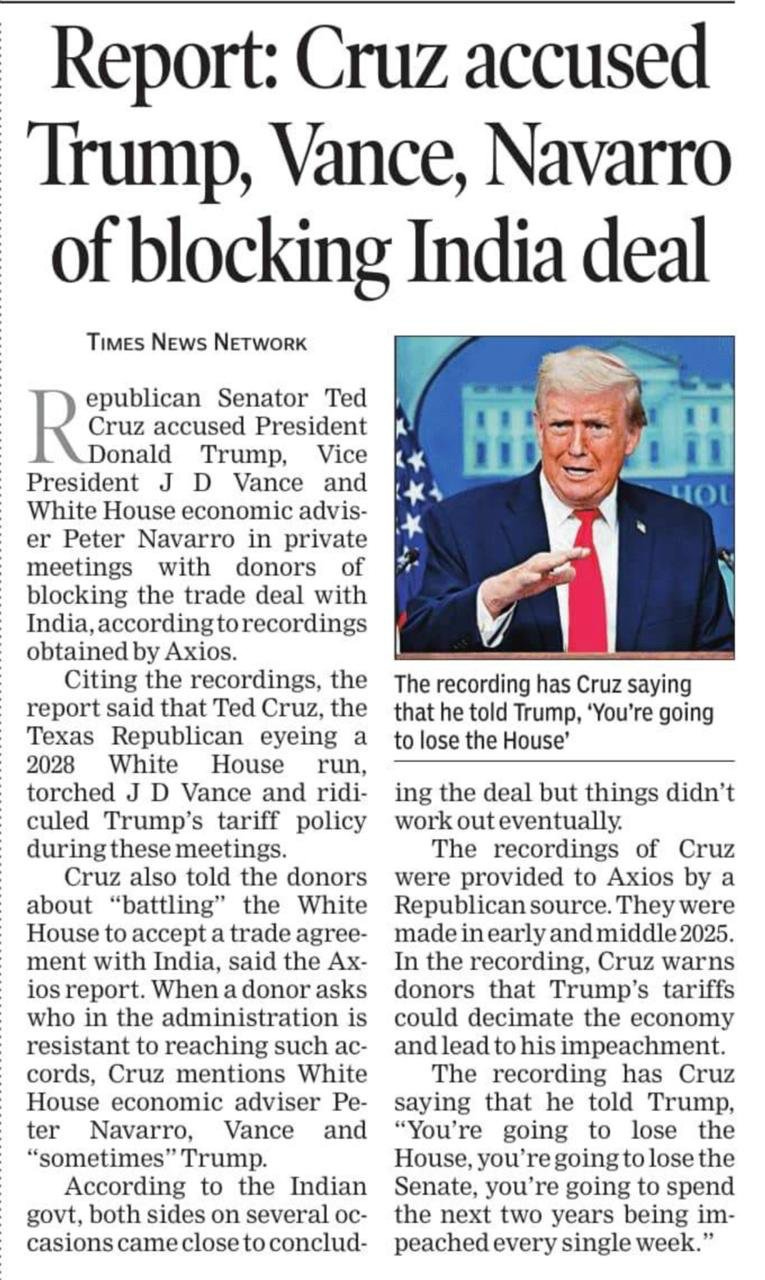
When Vice-President JD Vance visited India with his family in April 2025, he was received warmly as a damaad ― a son-in-law of the nation. But 10 minutes of leaked recordings of Texas Republican Senator Ted Cruz with donors for his 2028 candidacy for the position of vice-president has revealed the awful truth: Vance blocked the forever hang-fire trade deal with India, though he had discussed trade in Delhi with the Modi government. Axios, which liberated the recording, reports: “Cruz also told the donors about ‘battling’ the White House to accept a trade agreement with India. When a donor asks who in the administration is resistant to reaching such accords, Cruz mentions White House economic adviser Peter Navarro, Vance and ‘sometimes’ Trump.”
Mamdani delivers storm warning in Hindi

When the father of all storms blanketed the northeast US, Zohran Mamdani got coast to coast publicity simply by doing what everyone in the US does after heavy snowfall ― he went out with a shovel. But his Hinglish snow emergency message for New Yorkers may have travelled even further: “We hope you guys samajh our baat.”
Sir Mark, Tully Sahib, witness to modern India’s story, signs off for the last time
Old India hand and BBC journalist Mark Tully, 90, died on the eve of Republic Day. He would have liked the coincidence, because he was as Indian as he was British. He was born in Tollygunge, Calcutta, when it was a suburb, and he was discouraged from speaking Indian languages because that’s what the servants spoke.
After his education in the UK, Tully returned to India on the staff of the BBC, which ran a rather small operation from Delhi. He spoke Hindi fluently, was more comfortable on India’s huge railway network than on aircraft, slid into the lives of people everywhere, and reported what other foreign correspondents could not even guess at. (The link is to the blog of former Financial Times reporter John Elliott who, like Tully, spent years in India). Tully made India accessible to the world through decades of rapid change, and he helped India understand itself. He was one of the people who made the BBC the gold standard of credibility ― when shortwave radio was a mass medium and people in Brezhnev’s Russia and Indira’s India tuned in to the BBC to learn the truth about their one neighborhood. When Indira imposed the Emergency, when she authorized Operation Bluestar, the attack on the Golden Temple, and when she was assassinated by her own Sikh security detail and a government-mandated pogrom against Sikhs followed ― through that long period when official lies rang out loud, Tully’s voice on the radio (and later his unambiguous reporting on TV, like on the demolition of the Babri Masjid) provided the truth to India. Decades later, the world is again at a point when such a voice is needed.
Research in Pondicherry reveals Smithsonian sculptures stolen from Indian temples
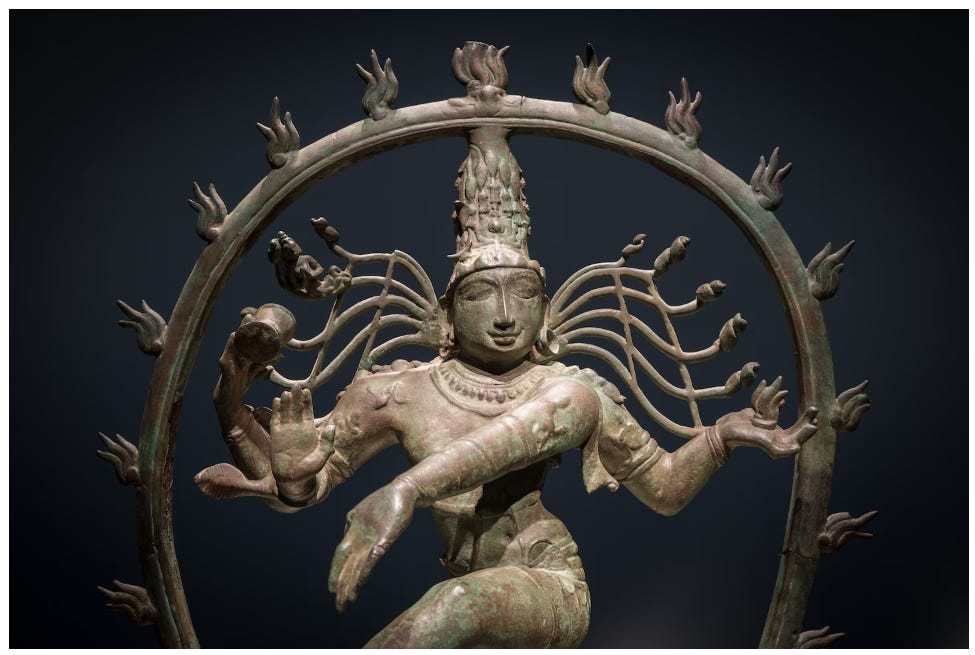
The Smithsonian’s National Museum of Asian Art is returning three bronze temple sculptures to India, after ascertaining that they were stolen. The sculptures of Nataraja (10th century) and Somaskanda (12th century) are Chola bronzes, and the 16th century sculpture of Saint Sundarar with Paravai (16th century) is from the Vijayanagara empire. The photo archives of the Institut Français de Pondichéry had revealed that the sculptures were photographed in the 1950s in temples in Tamil Nadu. While the Indian government has graciously offered the Nataraja on long-term loan to the Smithsonian, Indian researchers whose archival work had exposed the theft of the statues say that they are religious objects and should be returned to the temples they were stolen from. Actually, the Smithsonian should have suspected that the statues were illegally obtained, because early documents of provenance are erratic.
Shah Jahan and Mumtaz Mahal remembered in Taj Mahal
The Mughal emperor Shah Jahan’s 371st Urs (death anniversary) was celebrated at the Taj Mahal, where he is buried with Mumtaz Mahal. While tourists usually get to see only their cenotaphs, on January 17, the basement which contains their actual graves was made accessible to the public. A Hindustani Satrangi Chadar in rainbow hues, made from 1,720 meters of silk cloth donated by the public, was offered. (Click the image for video.)

Video by Timurid-Mughal Archives
Is disorder the norm?
In the Texas National Security Review published from Austin, Shivshankar Menon, former Indian National Security Advisor and chair of the Ashoka Center for China Studies in New Delhi, investigates the persistence of the idea of a world order, a rules-based system which is commonly understood and accepted. Are we in an interregnum between world orders, or is this the default state of human affairs. In short, was the order which the world welcomed after the shock of the World Wars a temporary departure from the norm? And is such an order actually good for the world, since it must be enforced and policed by a hegemon or a group of superpowers?
Arijit’s exit signals trouble in film music industry
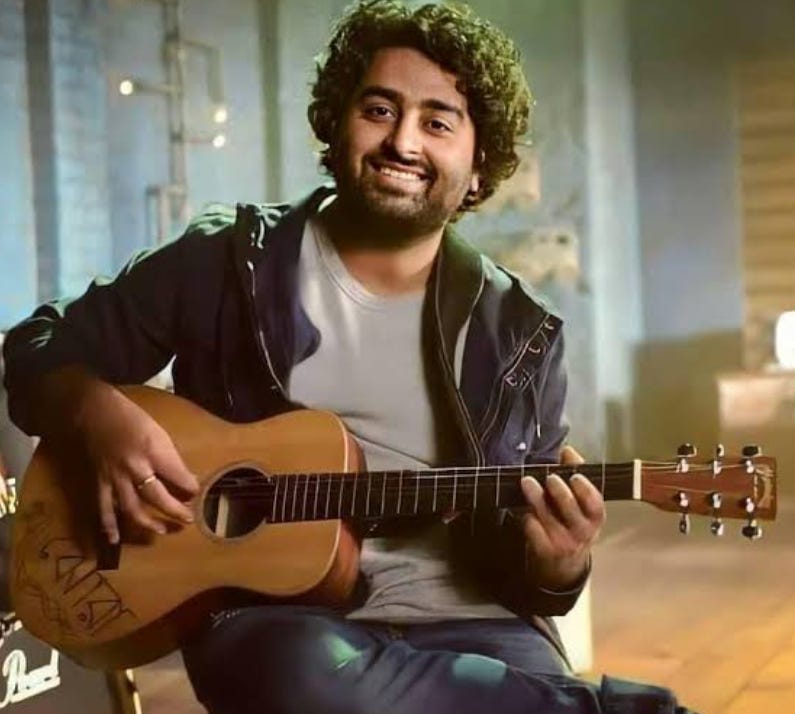
Reluctant celebrity Arijit Singh is stepping away from the limelight. The playback singer, whose voice set the tone for romantic Bollywood film music for over a decade, will no longer take on assignments from the industry. The unkind say that he is bored, because producers have turned his style into a replicable formula. Now, everyone sings like him, including himself. The small-town boy from the borderlands of West Bengal (the very zone accused of facilitating illegal migration from Bangladesh) was born into a family of classical musicians. He received training from an early age himself. He has career options for the future.
Universal’s loss is Paramount’s gain
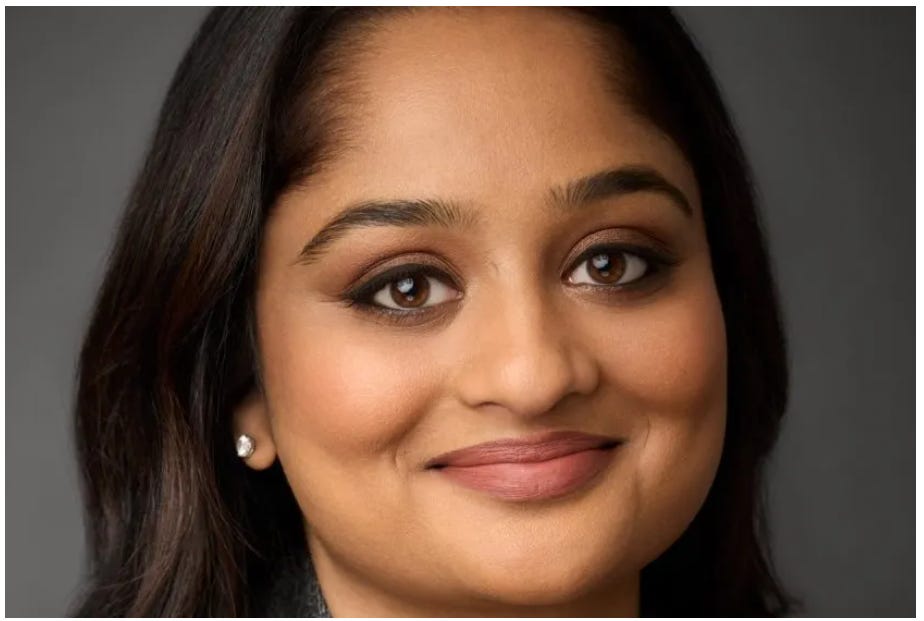
Shivani Patel, Universal Entertainment’s senior VP of strategy and business development for the last 11 years, has been named executive VP of strategy and operations at Paramount. She will report to Paramount Pictures co-chairs Dana Goldberg and Josh Greenstein.
Bhajan jamming takes Vaishnava devotion public

No food, no booze, floor seating, but pots of devotion ― bhajan jamming is a craze sparked off by Backstage Siblings of Kolkata, Raghav and Prachi, who put promising careers in markets and finance on ice to tour India with a powerful mix of Vaishnav devotional and Sufi music with mainstream pop, folk rock, etc. They’ve brought the bhajan out of private drawing rooms and devotional centers to public performance spaces. The trend is rippling through the Gen Z diaspora and has reached the US via Dubai.
Pravasi Diwas and World Hindi Diwas at ICC Milpitas
For the first time, the Indian Community Center (ICC) in Milpitas, CA, hosted the celebration of Pravasi Bharatiya Diwas and World Hindi Diwas. The event was organized by the Consulate General of India in San Francisco, in partnership with the Uttar Pradesh Mandal of America (UPMA). For more, click here.
India House Foundation in our other channels
Six Muslim nations banned Dhurandhar because it offended Islamabad — and it became a superhit in Pakistan via illegal downloads (Instagram).
The world’s two most important democracies, India and the US, are turning illiberal because they have forgotten how to blush, writes Manav Sachdeva (Website).
Aloka, a stray dog from Kolkata, is marching with Buddhist monks carrying the message of peace across the US (Instagram).
The RSS has turned 100, and it still doesn’t pay taxes (LinkedIn)
The strange case of xenophobia triggered by palak paneer at the University of Colorado (X.com).
The archaic sailing ship Kaundinya’s voyage retraced an ancient trade route from Gujarat to Oman (Facebook).
On this day 78 years ago, Mahatma Gandhi was gunned down at a prayer meeting by Nathuram Godse. We end with the words of the Father of the Nation:
“Whenever you are confronted with an opponent, conquer him with love.”
(From SR Tikekar’s Gandhigrams, 1947)
Incredible reporting on the H-1B pause and what it means for talent flows. The detail about LinkedIn tracking a 40% jump in tech workers relocating to India during Q3 2025 really underscores how policy uncertaintiy is reshaping decades-old patterns. I've seen this firsthand with colleagues who are now weighing staying put over risking visa limbo, which honestly feels like a turning point for India's tech ecosystem.